  
|
Posted By Stephanie Kirschner, FSDA,
Wednesday, February 4, 2026
Updated: Wednesday, February 4, 2026
|

LinkedIn has evolved into one of the most powerful tools for design professionals looking to build visibility, credibility, and meaningful connections. Yet many architects, engineers, and operations leaders aren't leveraging the platform to its fullest potential. During our final EDConnect25 session, marketing strategist Josh King—founder of Tinderbox Marketing and instructor at Whitworth University—shared practical, actionable guidance tailored specifically to professionals in the A/E/C industry.
Why LinkedIn Matters More Than Ever
LinkedIn is no longer just an online résumé—it's your digital storefront. It's often the first place clients, colleagues, future employers, and industry partners go to learn who you are and what you do. A strong LinkedIn presence helps design professionals:
- Communicate their expertise
- Showcase meaningful work
- Strengthen firm visibility
- Build lasting industry relationships
In today's competitive landscape, a well-managed profile isn't optional—it's a core part of building both personal and firm-wide reputation.
About Josh King
With a career spanning digital media, brand strategy, and corporate marketing, Josh King brings deep insight into how creative and technical professionals can communicate with clarity and impact. His session focused on simple, sustainable steps anyone can take to strengthen their LinkedIn presence—no marketing or social media background required.
1. Build a Strong Personal Profile
Your profile is the foundation of your professional brand. Josh emphasized several essentials that design professionals should update immediately:
- Professional Photography: A clean, high-quality headshot provides an immediate boost in credibility. Skip the selfies and casual crops.
- Meaningful Headlines: Move beyond job titles. Use your headline to communicate your role, specialty, or what differentiates your work.
- Updated Contact Information: Make it easy for people to reach you—especially clients, partners, and recruiters.
- A Clear, Third-Person Bio: Your About section should function as both an introduction and a professional summary. Write it in the third person to make it easy for others to share, reference, or repurpose when needed.
A polished profile builds trust and sets the tone for your interactions across the platform.
2. Post Content With Intention
You don't have to post every day, but consistency matters. Josh recommends posting two to three times each week, focusing on content that:
- Highlights recent projects or milestones
- Offers behind-the-scenes insights into your process
- Shares lessons learned or best practices
- Responds to industry trends
- Elevates colleagues or celebrates team achievements
For those unsure where to start, even short audio notes, project reflections, or meeting takeaways can be transformed into posts using generative AI tools. The goal is progress, not perfection.
3. Strengthen Your Firm's Presence
A firm's LinkedIn presence is often one of the first touch points for prospective clients and talent. Josh encouraged firms to:
- Assign ownership of the company page to designated staff
- Maintain branding consistency, especially across visuals and messaging
- Encourage employees to engage, share content, and amplify company updates
- Repurpose long-form content into shorter posts to extend reach
A cohesive firm presence reinforces brand identity and showcases the human side of your work.
Quick Tips You Can Put Into Action Today
- Start your morning with a 5–10 minute LinkedIn check-in. Engage with posts, comment thoughtfully, or share a quick insight.
- Ask a colleague or leader to record a 30-second voice note about a recent project—turn it into a post.
- Review your headline and About section. Updating these two areas can dramatically improve your profile in minutes.
- Consider a weekly "LinkedIn Power Hour" where your team posts, shares, or updates profiles together.
Small, consistent actions create momentum and make the platform feel manageable rather than overwhelming.
4. Track What's Working
LinkedIn offers valuable metrics—profile views, post performance, follower growth, and engagement trends. Reviewing these regularly helps you understand what resonates with your audience and refine your content strategy accordingly.
Your Next Step: Refresh Your Presence
Josh's message was clear: your LinkedIn presence deserves intentional care. A few small updates can dramatically improve your visibility and impact in the A/E/C community. Whether you're a marketer, business operations professional, emerging designer, or firm leader, your profile is one of the easiest and most effective ways to strengthen your professional voice.
Want to Learn Directly From Josh? Share the Full Session With Your Team
This article only scratches the surface of the insights Josh delivered at EDConnect25. If you want to explore his full strategies—including live examples, profile walk-throughs, and deeper implementation tips—you can purchase the complete session recording here. SDA Member Price: $59 (be sure to log-in for member pricing).
Many firms use SDA recordings for:
- Team lunch-and-learns
- Marketing and business development training
- New hire onboarding
- Professional development credit
- Skill-building for emerging leaders
It's an excellent resource for individuals and teams looking to elevate their LinkedIn presence and strengthen their professional brand.
Tags:
AEC Learning
AEC Marketing
EDC25
LinkedIn Training for AEC
SDA National
Permalink
| Comments (0)
|
|
|
Posted By SDA Headquarters,
Thursday, January 29, 2026
Updated: Thursday, January 29, 2026
|

In today’s fast-paced A/E firm environment, productivity is less about working harder—and more about designing smarter systems, workflows, and habits that remove friction from the day.
During SDA’s January 2026 Productivity Hacks Virtual Roundtable, members from across the country came together for a lively peer-to-peer conversation focused on practical ways to save time, streamline work, and improve day-to-day operations. The discussion surfaced ideas spanning automation, technology, task management, and workflow design—grounded in real-world experience.
Here are a few key takeaways from the session.
Reducing Manual Work Through Better Systems
One of the strongest themes was the value of reducing manual processes through smarter workflows. Several members shared how moving requests and data collection out of email and into simple online forms has improved accuracy, reduced follow-ups, and saved time.
By standardizing how information enters the system, firms are able to launch projects faster, eliminate missing details, and create cleaner handoffs between teams. The takeaway was clear: meaningful productivity gains often come from redesigning how work flows, not adding more tools.
Technology That Truly Supports Productivity
Participants highlighted several digital tools that have become part of their everyday workflow.
The Remarkable Tablet generated strong interest as a practical way to combine handwritten notes with digital organization, helping reduce paper clutter while keeping information accessible.
AI tools such as ChatGPT were also discussed as helpful partners for drafting emails, outlining procedures, and jump-starting documentation. While adoption varies, many agreed that starting with low-risk, routine tasks is an effective way to build comfort and uncover value.
Across the discussion, one theme emerged consistently: the goal is not technology for its own sake, but technology that removes friction from routine work.
Simple Habits That Make a Big Difference
Beyond tools, members shared time-management strategies that help maintain focus in busy operational roles. Daily priority lists—especially identifying the top three “must-do” tasks—were a popular way to protect time and maintain momentum amid interruptions.
Others shared how small adjustments, such as using Outlook reminders, Excel shortcuts, and task boards, have helped reduce rework and stay organized. These incremental improvements, when combined, create noticeable gains across the workday.
Making Invisible Work Visible
One powerful theme that emerged during the roundtable was the importance of recognizing SDA members not simply as “support,” but as the designers of the systems that keep firms running. When an administrator streamlines a proposal process, automates a report, or creates a smarter template, it isn’t “no big deal”—it’s reclaimed time, reduced stress, and improved consistency for the entire team.
Even a 10-minute improvement to a recurring task, multiplied across dozens of proposals or projects each year, adds up to hours of capacity a firm can reinvest in higher-value work. As a community, SDA members are encouraged to document and articulate these wins rather than minimize them, helping ensure that the often-invisible impact of their expertise becomes visible, understood, and valued within their firms.
The Power of Peer Learning
Perhaps the most valuable outcome of the roundtable was the shared learning itself. From automation successes to adoption challenges, the conversation reinforced that productivity challenges are rarely unique—and that peer insight is often the fastest path to better solutions.
The session closed with a reminder that small changes, applied consistently, can significantly improve both efficiency and work satisfaction.
Continue the Conversation
Missed the session or want to revisit the discussion? The recording is available for purchase through the SDA Store.
Have a productivity tip that’s working well in your firm? We invite you to share your ideas in the comments below. Be sure to join future roundtables as we continue exploring ways to strengthen operations and elevate performance across A/E firms.
To learn more about upcoming programs, visit the SDA Events Calendar and stay connected with the SDA community.
Tags:
AEC Business
AEC Learning
AEC Operations
Productivity
SDA National
Permalink
| Comments (1)
|
|
|
Posted By Stephanie Kirschner, FSDA,
Thursday, January 22, 2026
Updated: Thursday, January 22, 2026
|

John Maxwell’s 21 Irrefutable Laws of Leadership teaches us that leadership ability is the “lid” on personal and organizational effectiveness. In simple terms, your leadership skills set the ceiling on your success and your team’s success.
A highly skilled engineer, architect, or accountant might be excellent technically, but if their leadership capacity is limited, the entire team’s performance will eventually plateau. On the other hand, when leaders intentionally grow, they “raise the lid”—allowing themselves and those they lead to achieve more than they ever thought possible.
The Lid in Action: A/E Industry Examples
- The Project Manager’s Lid
A project manager may be brilliant with design and technical details but struggles to communicate expectations clearly. The result? Confusion, rework, and loss of profitability. The leadership lid holds back the team’s effectiveness, and not because of skill, but because of limited leadership ability.
- The Department Head’s Lid
A department head who refuses to delegate keeps all decisions at their desk. The bottleneck creates frustration, slows projects, and prevents team members from developing. The lid isn’t a technical ability; it’s a lack of trust and empowerment.
A principal who invests in developing emerging leaders lifts the lid. By providing training, mentorship, and opportunities for others to step up, they expand the team’s capacity. That investment multiplies the firm’s effectiveness and strengthens its future.
Why This Matters for Design Firm Leaders
In the A/E industry, we pride ourselves on technical excellence — and rightly so. But the Law of the Lid reminds us that technical skills alone don’t scale organizations. Leadership capacity does. The way we communicate, empower, delegate, and influence determines whether our firms thrive or stall.
The CDFO Connection
The lack of leadership skills is where the Certificate in Design Firm Operations (CDFO) comes in. Preparing for and earning the CDFO is one of the most effective ways to raise your leadership lid.
The program doesn’t just deepen your knowledge of finance, contracts, and operations — it broadens your perspective as a leader. It equips you to:
- See beyond your department and understand firm-wide dynamics.
- Make better strategic decisions rooted in both numbers and people.
- Influence outcomes across the organization, not just in your lane of expertise.
In short, the CDFO helps you raise your lid and, in turn, raise your firm’s lid. Where might your own leadership lid be showing up today? And what’s one step you could take to raise it?
The best leaders are lid-lifters. They invest in themselves so they can invest in others, raising the ceiling on what’s possible for their teams and organizations.
👉 Apply for the CDFO today and take the next step in raising your leadership capacity — and your firm’s future.
SDA does not endorse any products or services mentioned, and SDA does not assume responsibility for any circumstances arising out of the interpretation, application, use, or misuse of any information presented. SDA recommends that the reader consult the appropriate legal, financial, or human resource counsel before implementing the information contained herein.
Tags:
AEC Leadership
AEC Learning
SDA National
Permalink
| Comments (0)
|
|
|
Posted By Sarah Kratzner,
Thursday, January 8, 2026
Updated: Thursday, January 8, 2026
|

Choate+Hertlein Architects
Our firm opened its doors in 1971 with small projects, typically quirky in nature, requiring out of the box solutions. Evolving over five decades and influenced by the varied interests of the partners, our resulting body of work represents a wide range of abilities and accomplishments, capitalizing on the variety of what Atlanta and the Southeast region has offered.
Throughout the years, one of the main areas of focus for our work has been the preservation, restoration, and adaptation of historic buildings resulting in an intimate knowledge of the fabric of built antiquity — the bones and sinew of the architecture of bygone eras. Located in a vibrant and growing city, other kinds of opportunities have allowed us to explore our interest in the design of highly original modern architecture. In many cases, we have been able to blend these two approaches in the adaptive fusion of historic and modern themes.
With this wide range of differing expertise, the joy of our practice is found in the goal of creating a common thread to run through it all. This has evolved into a level of creativity and care that heightens and distinguishes the quality of our built work, whether respectfully historic or creatively new. Underlying our approach is the belief that no two opportunities are the same. We stretch to find the "Big Idea" that will give our work a sense of place and time, all in the service of our clients´ needs and desires.
The type, scale, and complexity of Choate + Hertlein Architects (C+H) work ranges from small, custom and finely-detailed interventions to large, complex adaptive reuse projects such as Ponce City Market and the redevelopment of the Centennial Yards South buildings in downtown Atlanta. We specialize in finding the appropriate solution to each unique challenge. Based on our accumulated knowledge and our creative passion, we consistently deliver pragmatic solutions and profound results.
Thank you to Choate + Hertlein Architects for being a firm sponsor with SDA National. To learn more about Choate + Hertlein Architects and their work visit their website Choate + Hertlein Architects
Tags:
SDA Firm Sponsor
SDA National
SDA Sponsorship
Permalink
| Comments (0)
|
|
|
Posted By Jennifer Greene, CDFO,
Tuesday, January 6, 2026
Updated: Tuesday, January 6, 2026
|
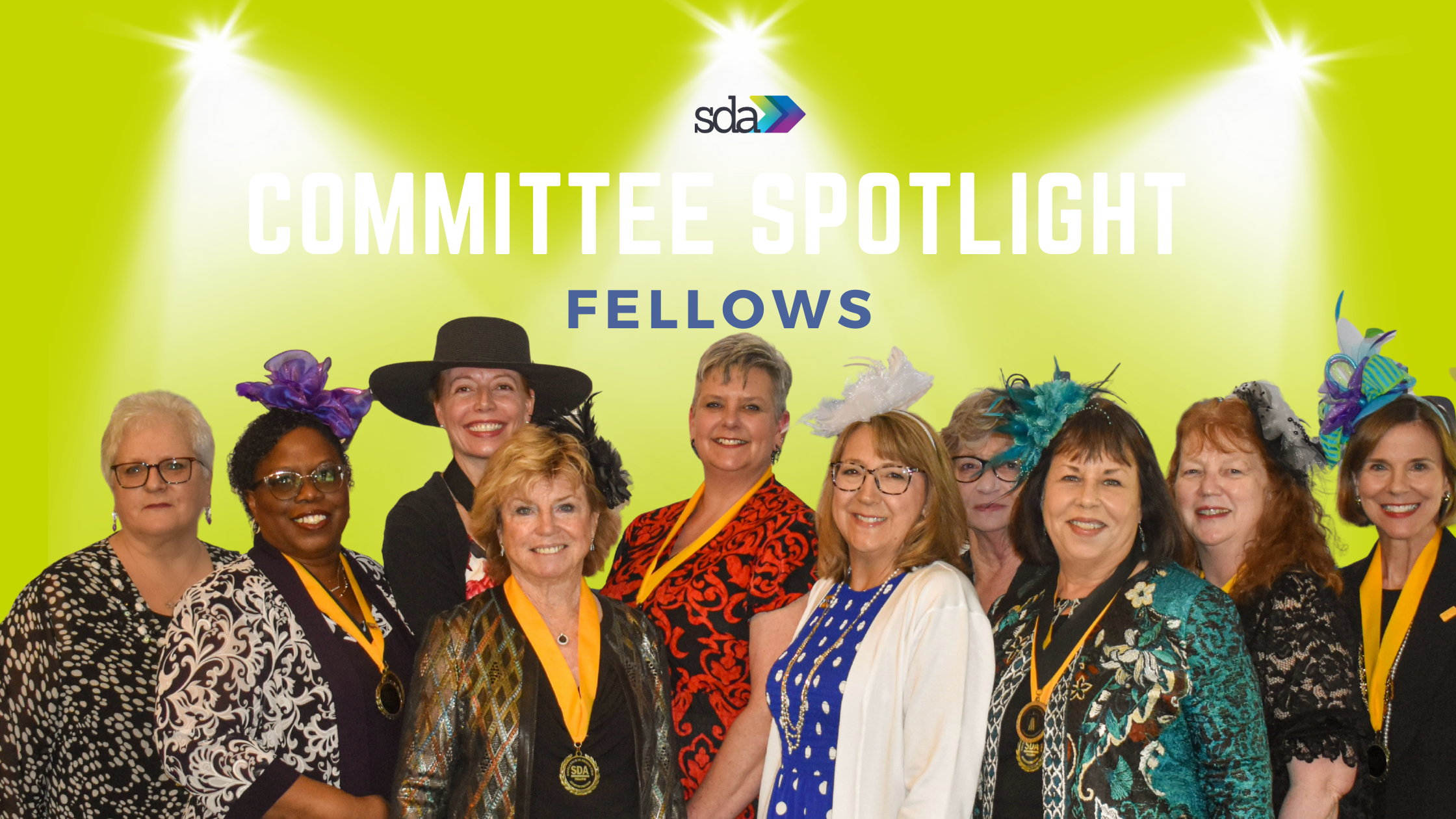
The SDA Fellows Program celebrates the best of the best, people who have helped shape the Society for Design and raised the bar for the business of design. These are the mentors, innovators, and big-picture thinkers who do more than show up; they make things happen. Becoming an FSDA means you have done more than contribute to SDA. It means you have made a lasting impact on your firm, your peers, and the profession itself.
Becoming a Fellow is a milestone worth aiming for. The process starts with a self-nomination, which is really an opportunity to pause and reflect on how far you have come and where you want to grow next. A panel of SDA Fellows reviews each application, looking for individuals who have shown leadership, dedication, and a commitment to advancing practice management. Along the way, you may find yourself inspired to pursue certification, take on new challenges, and continue developing your skills and confidence as a leader.
And here is the best part: the journey does not stop once you are named a Fellow. This group is always up to something good, mentoring members, leading programs, and creating spaces for meaningful professional growth. Their annual Path2Success series has become a fan favorite. It is part book club, part leadership lab, where SDA members dig into big ideas together. This year’s pick, Radical Candor, sparked great conversation about feedback, communication, and authentic leadership that truly changes workplaces for the better.
At its heart, being an SDA Fellow is not about a title. It is about belonging to a circle of professionals who lift others while continuing to grow themselves. Fellows are the ones who see what is possible and help the rest of us get there. If that sounds like you, or the you you want to become, maybe it is time to start your own Path to Success.
Tags:
AEC Leadership
AEC Operations
SDA Fellow
SDA National
Permalink
| Comments (0)
|
|

 Blog Home
 All Blogs
 RSS
RSS